Back to newsletter
NEWSLETTER
Your AI Workforce Has No Personnel Files.
April 21, 2026
NEWSLETTER
April 21, 2026
Deloitte's 2026 State of AI survey of 3,235 senior leaders found only one in five companies has a mature governance model for autonomous AI agents. The other four in five have been calling the relationship between their organization and its agents by an engineering name that routes accountability to a department with no hire-and-fire authority. Agents make decisions a human used to make. The organization already owns the framework for governing exactly this kind of work. It has never applied it because nobody formally admitted the agents were a workforce.
The CFO had been listening for twelve minutes when she raised her hand and changed the verb.
The slide showed thirty-seven AI agents, all monitored through Microsoft Purview's DSPM for AI, all producing clean audit data, all operating within defined parameters. The CISO was walking through alert thresholds with the patience of someone who had given this presentation before.
"Who hired the third one?"
The CISO paused at the verb. He had been prepared to discuss performance. She was asking about employment. Compliance had a Responsible AI policy. Procurement had the vendor contract. HR had not been in the room when any of the thirty-seven were brought on, because HR had never been invited.
She wrote down a number on her notepad. "That is the one I want to know about. You can tell me later."
The question this edition answers is not whether your AI governance program is good. It is whether your governance program has been operating in the wrong vocabulary for three years.
Here is the discovery most AI governance programs have not made yet.
The word "deploy" is doing more damage than any single regulation. When an organization "deploys" an agent, everything that follows is a software engineering relationship. Version control, change management, monitoring, rollback procedures. The vocabulary invokes the tools, the tools invoke the budgets, and the budgets live inside an engineering organization that has never written an offer letter for anything.
The agent is not code running a task. The agent is making decisions a human used to make. Reviewing loan applications, triaging customer complaints, approving transactions for manual review. The organization already has a century of accumulated frameworks for governing exactly this kind of work: hiring, offer letters, scope of authority, performance management, supervisor assignment, insurance riders, background checks. None of it has been applied to agents. The organization has been calling the relationship by a different name, and the name goes to a department with no seat at the governance table.
Picture the HR director walking into the next AI governance committee meeting and asking to see the personnel files for all thirty-seven agents. There would be a pause. Then someone would laugh. That laughter is the entire governance problem in one exchange. HR was never invited because agents are not employees. But an examiner asking for authorization documentation is not inviting HR either. She is asking for the exact document HR would have produced if it had been in the room.
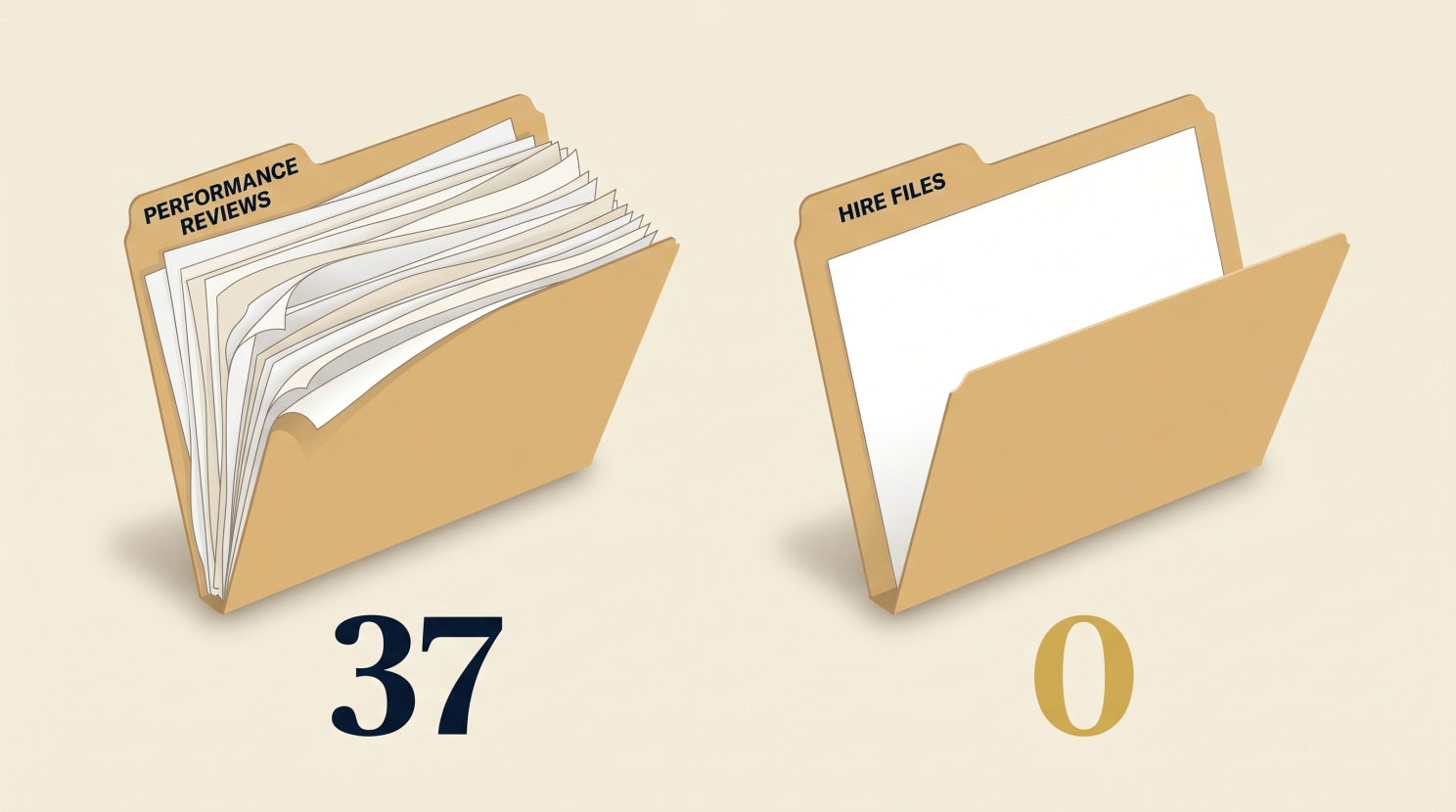
Deloitte's 2026 State of AI survey of 3,235 senior leaders foundonly one in five companieshas a mature governance model for autonomous AI agents. That statistic has a simpler reading. One in five behaves as if it has both documents: a performance review and a hire file. Four in five have spent three years trying to invent a new framework for something every CFO and every HR leader has known how to govern for a century.
Aon's AI Risk 2026 report, published March 2026, notes that D&O underwriters are explicitly evaluating evidence of AI governance structures and board oversight when assessing AI governance maturity, distinct from monitoring coverage. Underwriters use the word "authorization" because insurance is an employment-adjacent discipline. Thirty-seven agents in production without authorization records are thirty-seven de facto hires the underwriter cannot seein the files. The premium you are paying was priced against the hires she could see. The exposure you are carrying is against the ones she could not.
OneTrust research published by CIO Dive in September 2025 surveyed 1,250 IT leaders and found 98% plan to increase AI governance budgets in the next financial year, with an average increase of 24%. Much of that growth is going to more sophisticated performance management and observability tooling. The HR function for AI agents is not on anyone's budget line.
Your organization has been hiring a workforce that grows by a dozen employees a quarter, runs performance reviews for all of them,has offer letters for none of them, and has never once introduced its own HR department to its own AI.
The framework that closes this gap is one the organization already owns. It is the HR model, applied to a workforce nobody admitted was a workforce. Call it the Governance Debt Ledger, or call it HR. Three steps, all of which every CFO would recognize instantly if the conversation were happening in any other department.
First, count the uncounted.Every agent running in production gets a named owner with authority to have hired it. If the owner does not exist, or would not have hiring authority in any other context in the organization, that is the first entry on the Ledger. Gravitee's 2026 survey of more than 900 practitioners found only 14.4 percent of organizations reported that all AI agents went live with full IT and security approval. The remainder is a staffing roster with most of the names missing.
Second, retroactively onboard. For every agent without a hire file, produce one. Administrative work, not architecture. Hours per agent multiplied by fully loaded labor cost gives the minimum remediation budget. Schedulable today. Not schedulable after an examiner asks for the personnel files.
Third, stop hiring without paperwork. Every future deployment goes through the same discipline the organization uses for the newest intern. Requisition, scope, named hiring manager, review, file opened before the agent starts working.
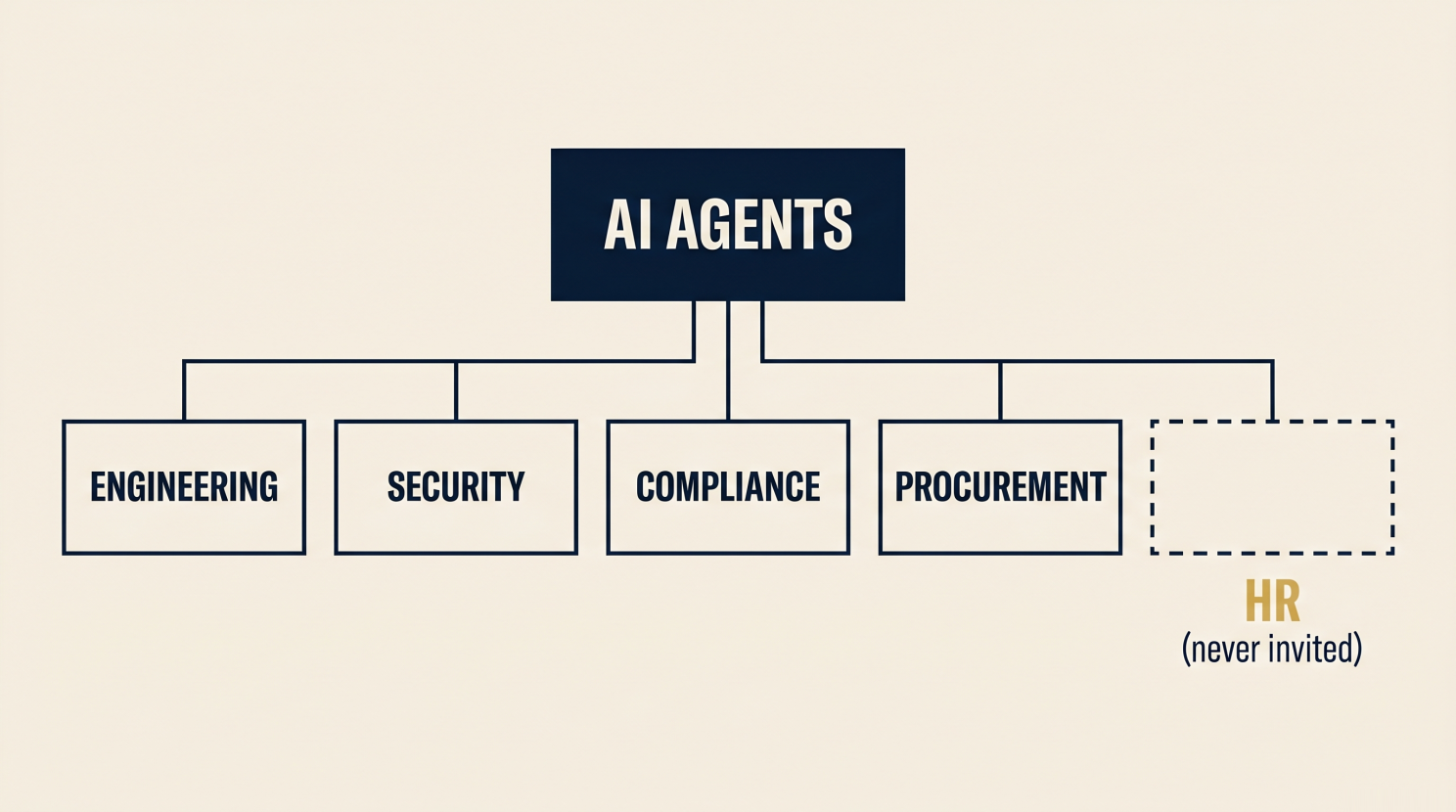
None of these steps requires inventing a new governance philosophy. They require the organization to admit the workforce that has been accruing is a workforce, and to apply the disciplines that existed long before anyone knew the word agent.
Your AI governance program has been running a performance management function for a workforce that was never hired. The examiner's arrival is the day the organization discovers its HR department has been vacant the entire time. The cost of opening that department this quarter is lower than opening it after the audit notice lands on someone's desk.