Adoption is fast and uneven
AI does not roll out in a straight line. One team may follow process while another uses unapproved tools. That speed mismatch creates control gaps and inconsistent risk decisions.
GOVERNANCE & SECURITY
AI adoption usually starts before policy catches up. Teams test tools, build automations, and launch agents long before leaders set clear decision rights. This blueprint gives you a concrete operating model so your organization can answer, in plain terms, who approved a system, who reviewed risk, and who owns the response when something goes wrong.
Topics in this research area
THE PROBLEM
AI adoption is already underway in most organizations, with or without formal governance.
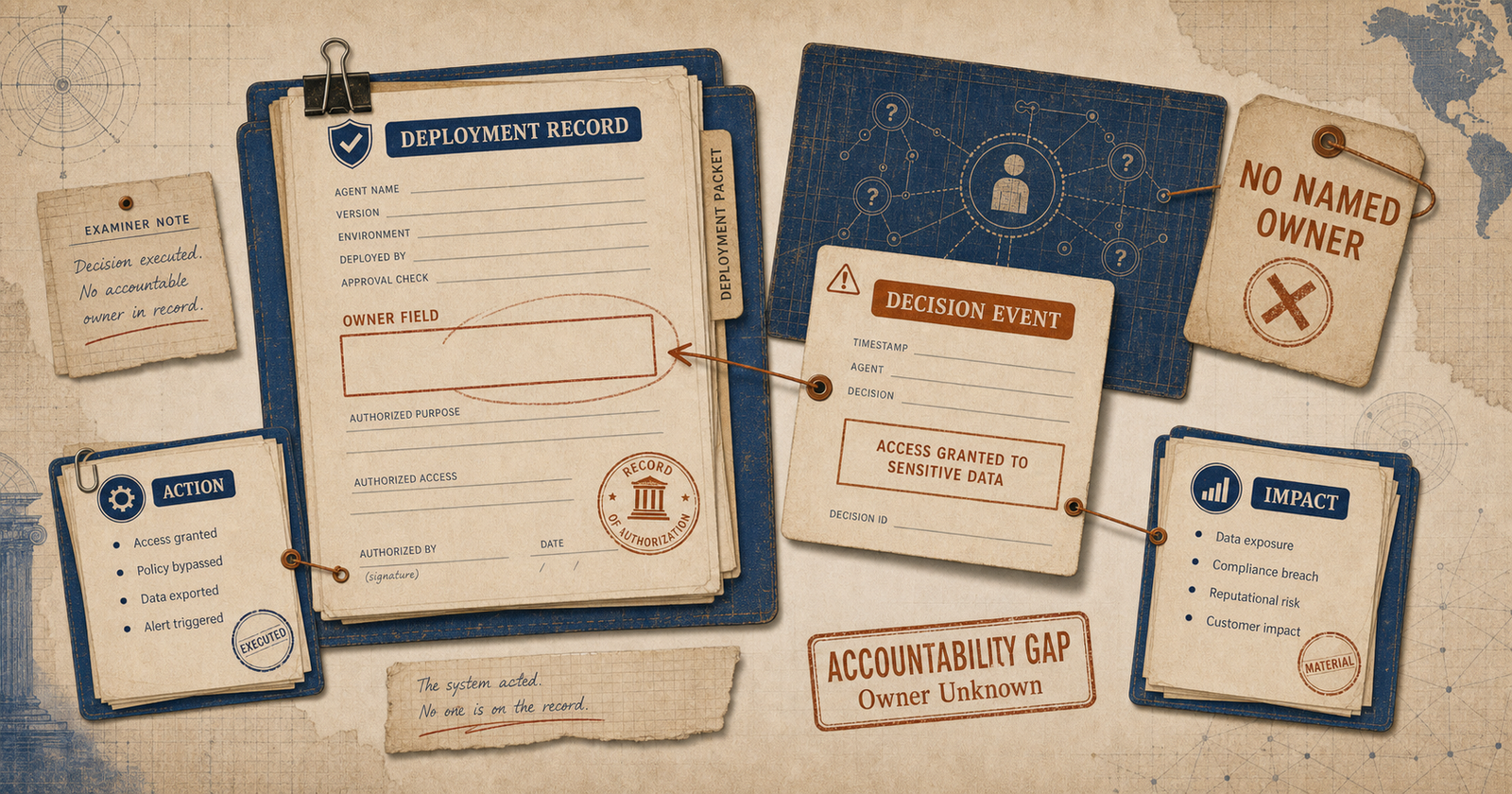
AI does not roll out in a straight line. One team may follow process while another uses unapproved tools. That speed mismatch creates control gaps and inconsistent risk decisions.
THE FRAMEWORK
Build a governance system that supports safe experimentation with explicit rules, named owners, and repeatable controls.
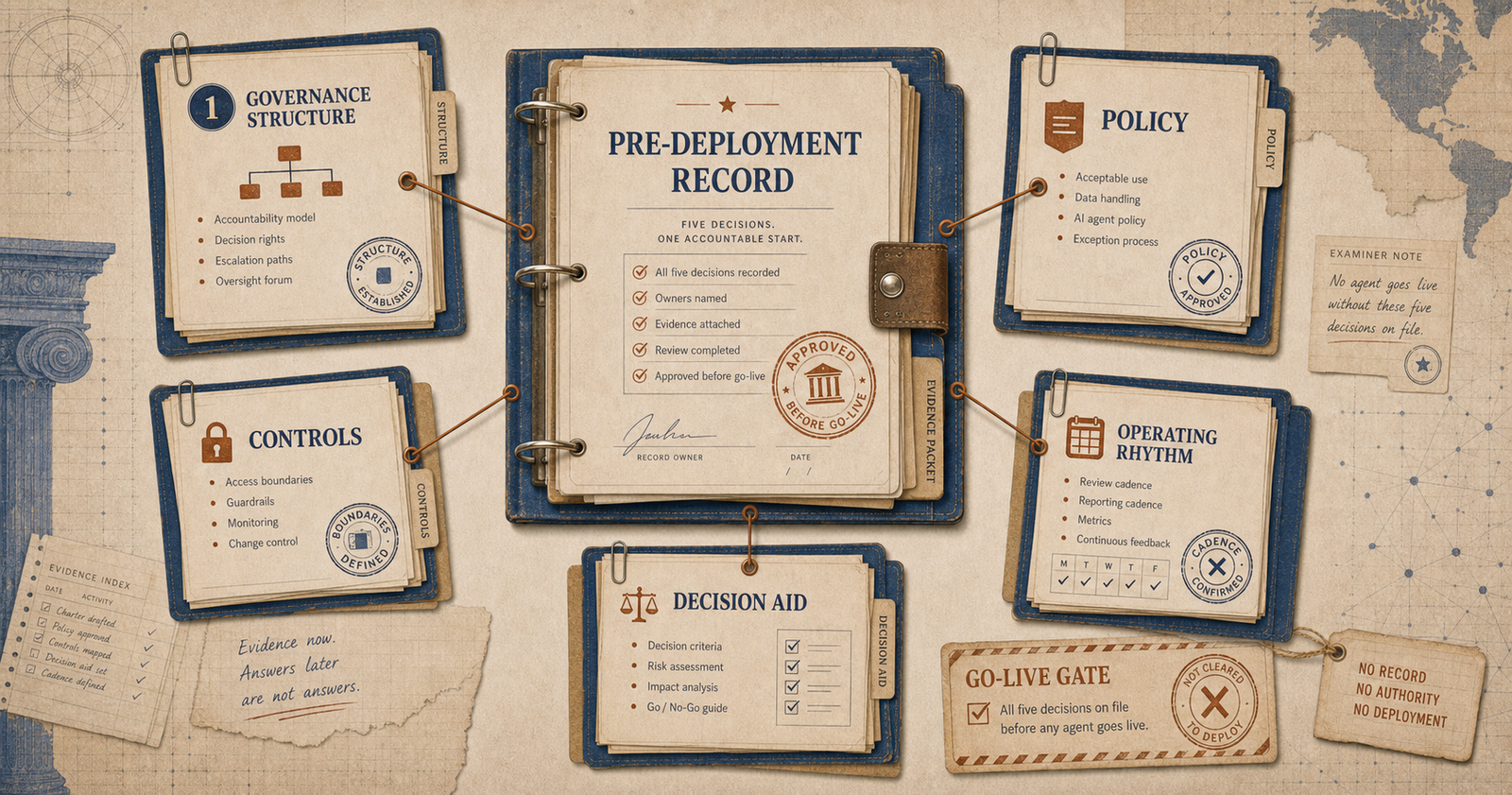
Define who approves tools, who signs off high-risk use cases, who handles incidents, and who tracks compliance. Named ownership prevents handoff failure during pressure moments.
Write practical rules for real decisions: approved tools, allowed data handling, risk tiers, review thresholds, and mandatory human oversight points.
Back policy with enforceable settings in your systems. The safest action should be the default, and exceptions should be visible and traceable.
Train people with short, practical guidance they can use in daily work. Good governance fails when staff cannot apply policy in real time.
MICROSOFT-NATIVE GOVERNANCE
In Microsoft-first environments, many governance capabilities already exist in your tenant. The value comes from mapping those controls to your policy decisions, ownership model, and review process.
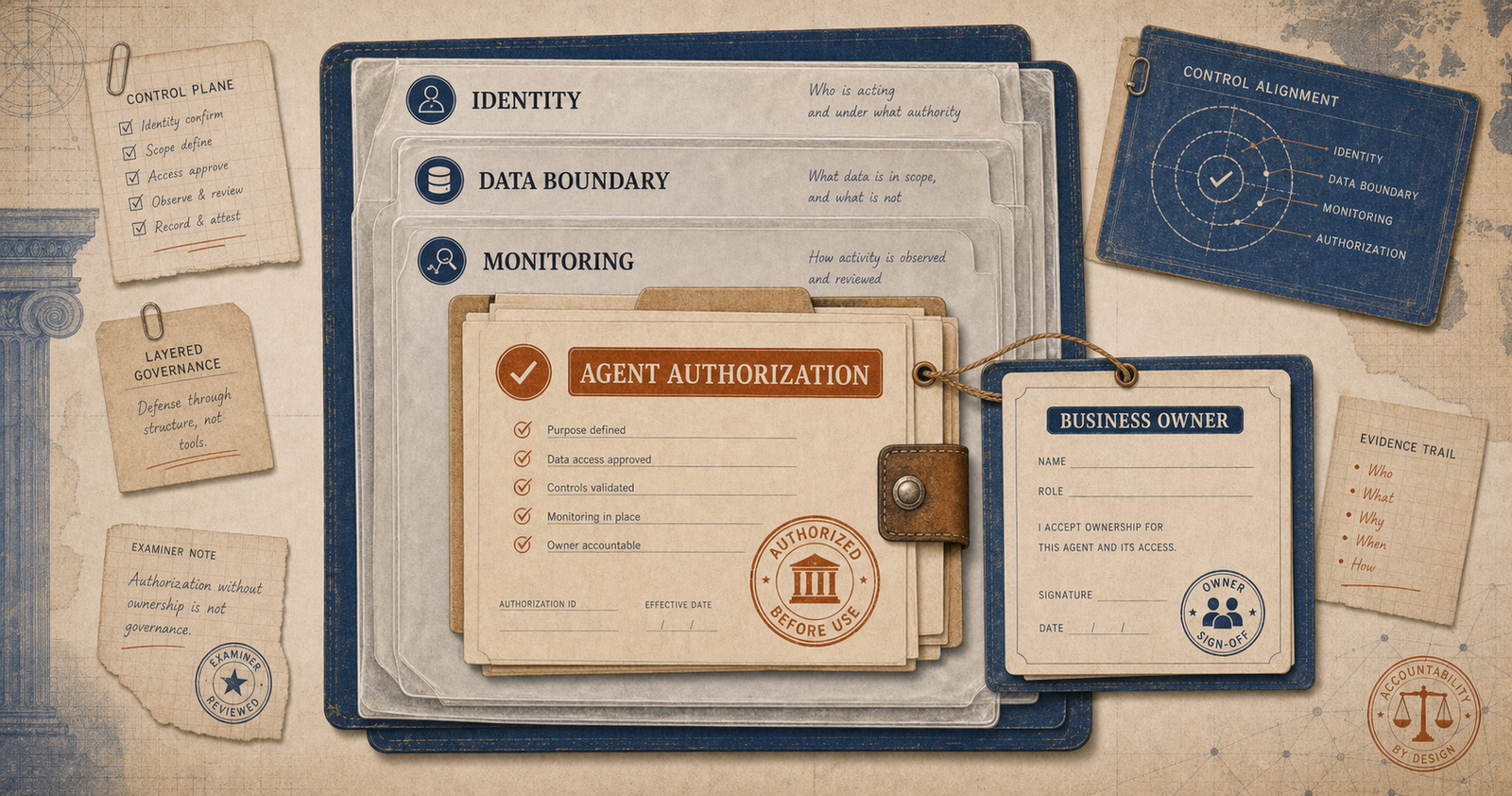
A control layer is where you enforce identity, access, data boundaries, and auditability. In Microsoft environments, this typically includes Microsoft Purview, Microsoft Entra ID, and Copilot Studio admin center capabilities managed through admin surfaces.
As you deploy Microsoft 365 Copilot agents and Microsoft Copilot Studio solutions, governance must extend beyond human users to agent design, connector access, and approval paths for consequential actions.
WORKING METHOD
A blueprint creates value only when teams can run it repeatedly. The model below turns policy into operating rhythm.
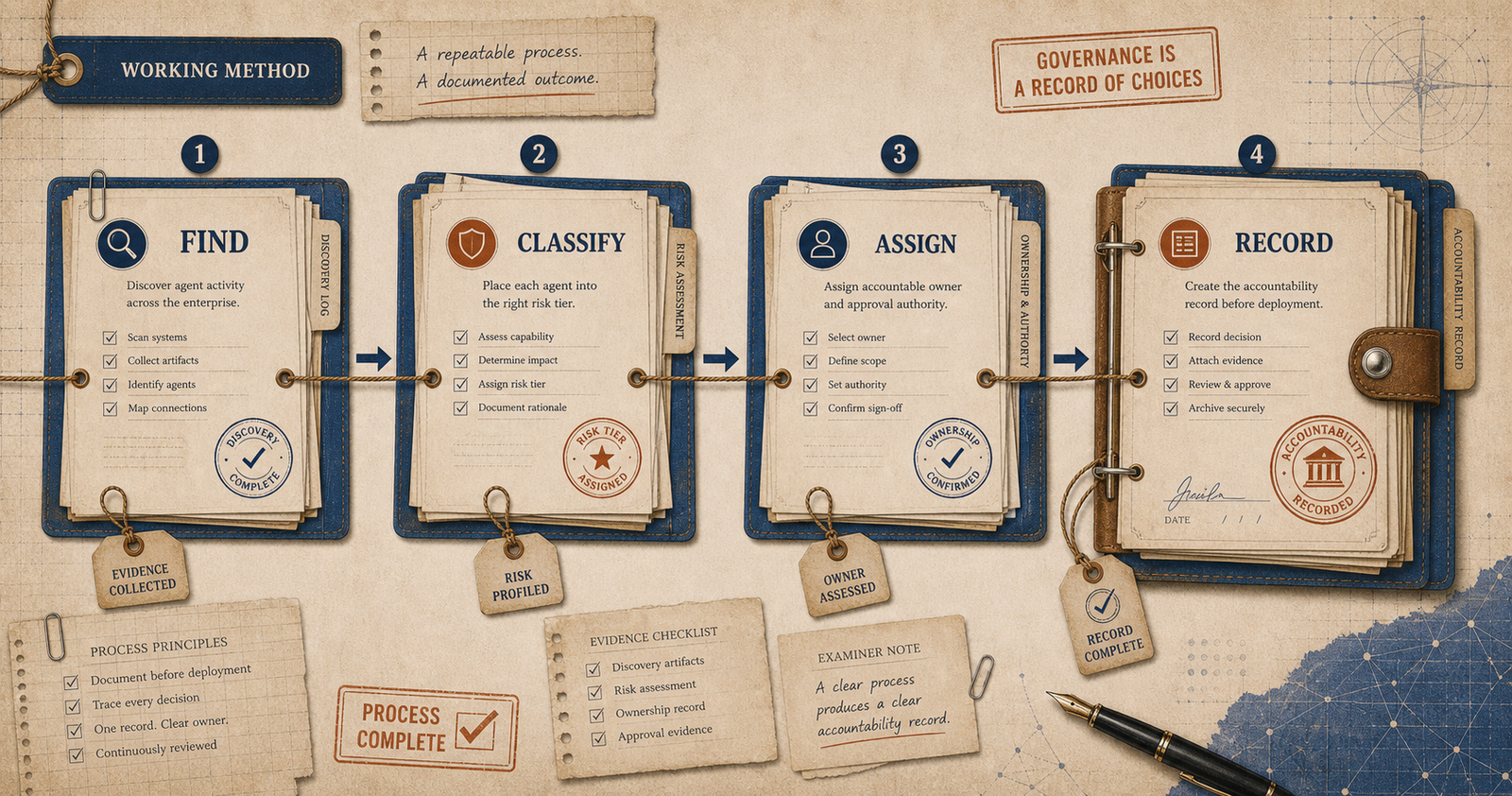
Interactive steps
Click or tap a step to update details on the right.
Selected step
Map real AI usage, policy maturity, ownership clarity, and regulatory exposure. Capture where controls already work and where they fail in practice.
Expected outcome
A baseline map of current risk, control maturity, and ownership gaps.
WHAT THE ACCOUNTABILITY LAYER REQUIRES
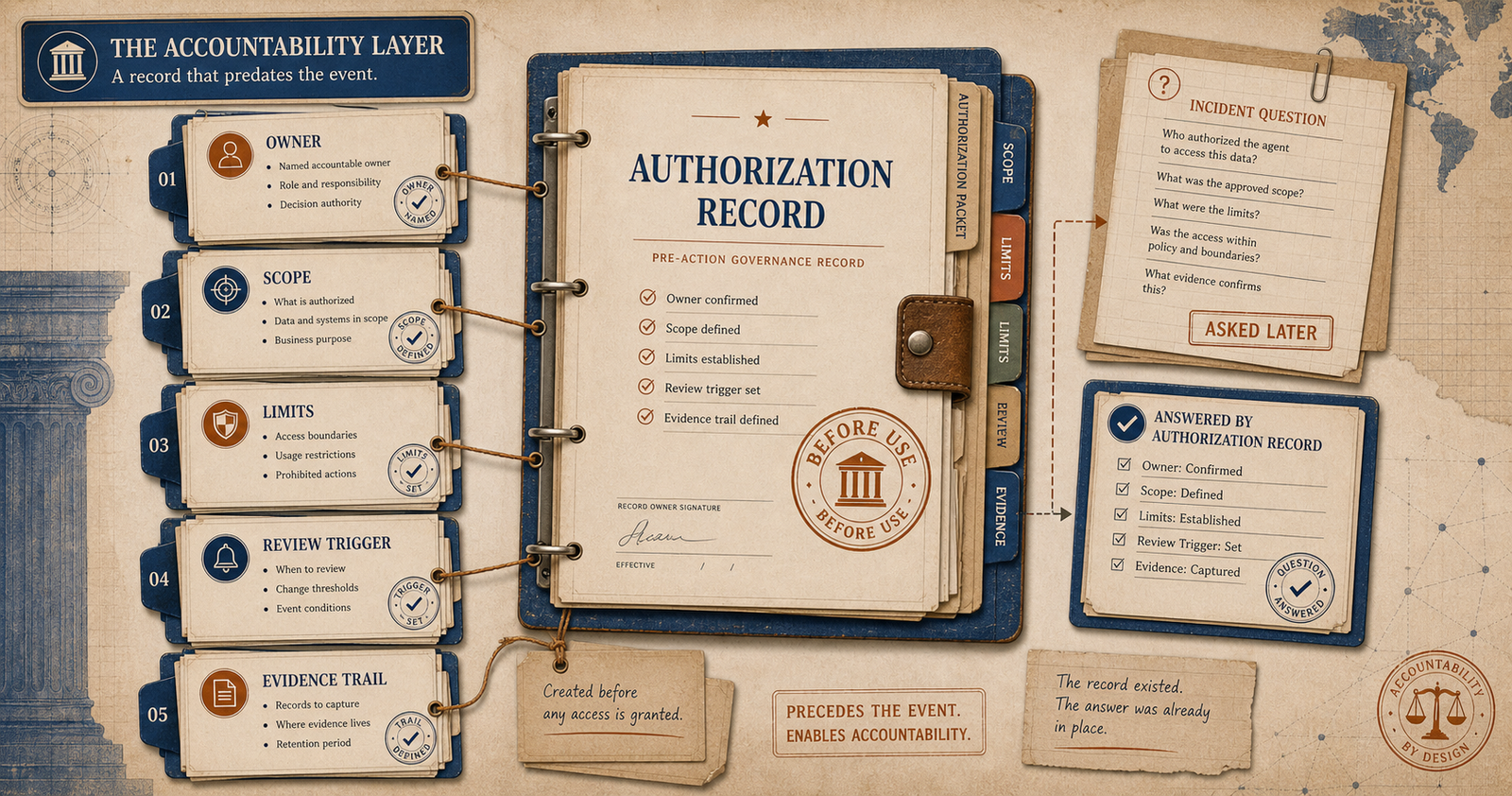
Primary source: CISA, NSA, ASD ACSC, CCCS, NZ NCSC, UK NCSC — Careful Adoption of Agentic AI Services, May 1, 2026. The first coordinated multinational security guidance on agentic AI defines five risk categories: privilege escalation, design and configuration failures, behavioral misalignment, structural brittleness, and accountability gaps. Each maps directly to the organizational decisions below.
Active deliverable
Named roles and review groups before the first agent is authorized. Most organizations deploy first and assign ownership later.
RIGHT FIT
COMMON QUESTIONS
NEXT STEP
The value is not a slide deck. The value is an AI operating model your organization can explain, review, and defend when risk, audit, and growth all hit at once.